On this page
New Berlin WI auto insurance at a glance
If you garage a vehicle in New Berlin, Wisconsin, your auto insurance needs to meet state law, fit your daily commute, and protect your household from financial surprises. Whether you’re merging onto I‑43 toward Milwaukee every morning, running errands along Moorland Road, or navigating National Avenue through Waukesha County, the coverage you carry matters more than most drivers realize.
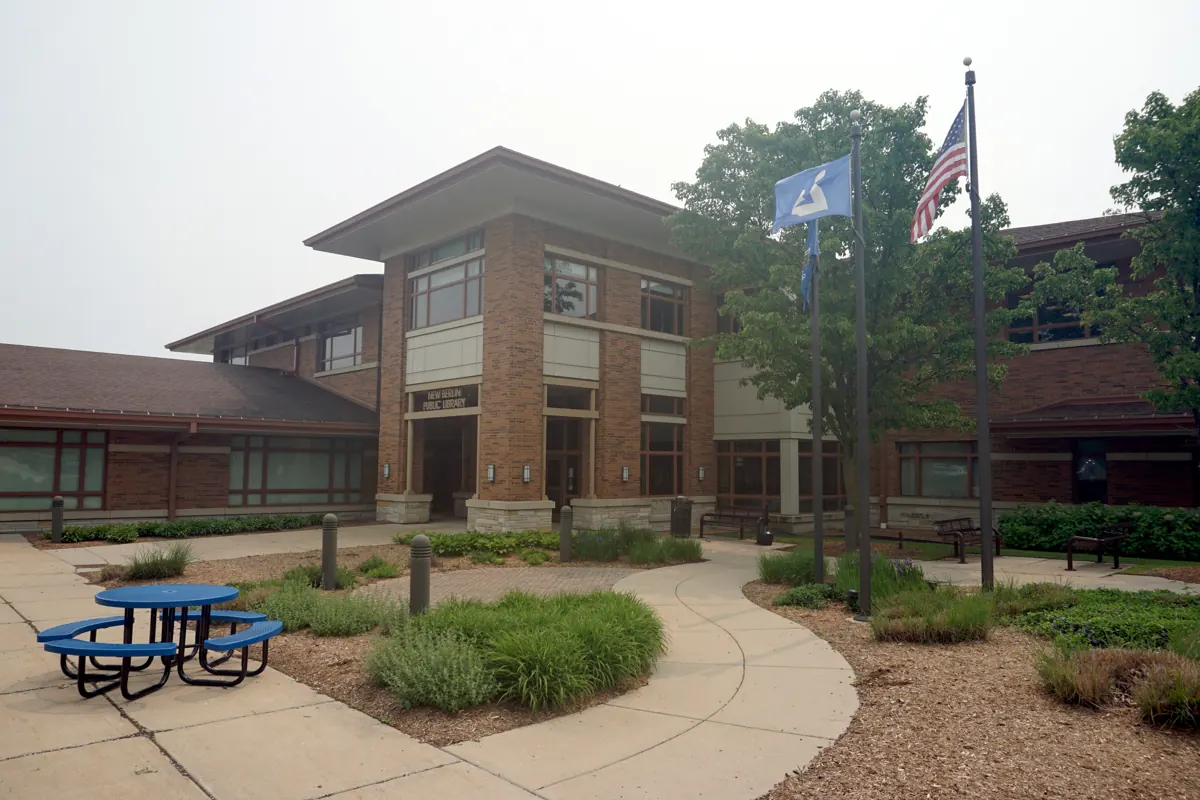
Photo: Michael Barera, CC BY-SA 4.0. Resized and converted to WebP.
.jpg)
WisconsinAutoInsurance.com, operated by Drivers Insurance Agency, Inc., helps New Berlin households compare auto insurance options by phone and online for a more personal insurance experience. This is a remote service – not a walk‑in office on Calhoun Road or anywhere else in the city – designed so you can review Wisconsin coverage options without rearranging your schedule, while also getting help with broader needs such as business insurance when available. The team works with multiple Wisconsin‑licensed insurers to help you understand what’s available for your vehicles and drivers.
New Berlin drivers reach out for many reasons: purchasing a new or used car, adding a teen driver attending a local high school, responding to a ticket or at‑fault accident, or needing an SR‑22 filing to clear a license issue. Whatever brings you here, the goal is straightforward – help you compare coverage options that fit your situation.
Ready to get started?Request a quote online or call WisconsinAutoInsurance.com at (844) 317‑1313 to review coverage for your New Berlin vehicles.
Why New Berlin drivers work with our insurance agency WisconsinAutoInsurance.com
WisconsinAutoInsurance.com is a Wisconsin‑based independent insurance agency that understands the driving patterns connecting New Berlin to Waukesha, Brookfield, West Allis, and Milwaukee. From highway congestion on I‑43 to icy arterial roads in January, local context shapes which coverage configurations make sense – and the agency brings that familiarity to every conversation.
As an independent agency, WisconsinAutoInsurance.com can review policies from multiple Wisconsin‑licensed insurance companies rather than representing a single insurer. That means the focus stays on helping you understand what’s available across carriers and compare personal or business coverage as needs change so you can decide on your own terms. It is advisable to compare insurance quotes across multiple carriers to find suitable rates, and that principle drives how this agency operates.
There is no pressure to buy. The team simply helps explain core coverages – liability coverage, uninsured motorist protection, comprehensive, and collision – so New Berlin drivers can make informed decisions that match their budget and, when applicable, lender requirements for financed vehicles, with a clear view of the money at stake if limits are too low.
Local advantages for New Berlin households
-
State‑minimum guidance vs. recommended limits. Wisconsin requires minimum auto insurance coverage for all drivers, but minimum limits may not be enough for every household. The agency can help you understand how 25/50/10 liability stacks up against your assets, income, and daily exposure on busy corridors like Moorland Road and I‑43.
-
Teen driver support. Adding a young driver from a local high school changes your policy’s risk profile. The agency can walk families through how a teen’s experience level, vehicle assignment, and suburban commuting patterns affect coverage decisions and overall premium.
-
Winter‑weather familiarity. Waukesha County sees snow, ice, hail, and windstorms every year. Understanding how comprehensive and collision coverages apply – and how deductible levels interact with seasonal risks – is part of the guidance New Berlin households receive.
-
All driving histories welcome. The agency serves clients with clean records alongside drivers carrying tickets, accidents, or prior lapses. For those who need SR‑22 filings after a suspension, the team can explain eligibility and obligations without promising guaranteed rates.
-
Remote service that fits busy schedules. Quotes can be started online at any time through the quote form or by calling (844) 317‑1313 – no need to fight traffic or find parking at a brick‑and‑mortar office.
Wisconsin auto insurance basics for New Berlin drivers
All Wisconsin drivers – including those in New Berlin – must follow statewide minimum liability and uninsured motorist rules set by the Office of the Commissioner of Insurance (OCI). These legal minimums apply whether you’re driving entirely within city limits, commuting via I‑43 into downtown Milwaukee, or parking overnight in a New Berlin subdivision. Policies can carry higher limits, but they cannot dip below the state‑mandated floor.
The sections below break down required and commonly purchased coverages using short explanations and bullet lists.
Required liability coverage in Wisconsin
Standard liability coverage pays for bodily injury and property damage to others in an accident. Liability coverage is required by Wisconsin law, with statutory minimums set at:
-
$25,000 bodily injury liability per person
-
$50,000 bodily injury liability per accident
-
$10,000 property damage liability per accident
This is often written as 25/50/10. Wisconsin requires minimum liability limits of $25,000 per person, meaning every auto policy issued in the state must meet at least this threshold.
Liability coverage does not pay for your own injuries or your vehicle’s damage. If the damages you cause exceed your policy limits, you may be personally responsible for the difference. Many New Berlin drivers consider carrying higher limits than 25/50/10 – especially those with multi‑car households, significant assets to protect, or daily highway commutes where accident severity tends to be greater. Higher limits are optional, not required, but they’re worth discussing with an agent.
Uninsured and underinsured motorist coverage
Uninsured motorist (UM) bodily injury coverage is required on Wisconsin auto policies. Minimum UM limits must be at least $25,000 per person / $50,000 per accident. Uninsured motorist coverage protects against uninsured drivers – it helps cover your bodily injury costs when an at‑fault driver carries no liability insurance or in hit‑and‑run situations.
Underinsured motorist (UIM) coverage is optional. If you elect it, Wisconsin law sets a minimum of $50,000 per person / $100,000 per accident. UIM may apply when the other driver meets the policy definition of underinsured; limits, offsets and other policy terms affect payment.
An important distinction: UM and UIM apply only to bodily injury. They do not pay for damage to your vehicle. If an uninsured driver hits your car, UM helps with your medical costs – not your car repairs. And UM/UIM does not cover deer strikes, hail damage, or theft; those losses fall under comprehensive coverage, subject to policy terms.
Medical payments (MedPay) coverage
Wisconsin insurers must offer medical payments coverage (MedPay) with at least a $1,000 limit. You may decline this optional coverage. Medical payments coverage covers medical expenses for drivers and passengers after an accident, regardless of who is at fault, up to the policy limit.
MedPay is separate from both your health insurance and your liability coverage. It can help fill gaps – covering deductibles, co‑pays, or emergency expenses that health insurance may not address immediately after a crash. New Berlin families often weigh MedPay against their existing health plans to decide whether the added cost is worth the extra layer of protection.
Coverage options New Berlin drivers ask about most
Beyond the required coverages, New Berlin residents face real‑world risks that shape their coverage decisions: winter storms that coat roads with ice, deer along less developed stretches of I‑43, vehicles parked in driveways or on the street under city restrictions, and newer financed cars that lenders want fully protected. Here’s how common optional coverages address those situations.
Comprehensive coverage for storms, theft and deer on I‑43
Comprehensive coverage protects against non‑collision incidents – damage from theft, fire, hail, falling objects, vandalism, severe weather, and animal strikes such as deer. A per‑occurrence deductible applies, and the insurer pays up to the vehicle’s actual cash value minus that deductible.
Wisconsin law does not require comprehensive coverage. However, lenders typically require it on financed or leased vehicles to protect their financial interest. Many New Berlin drivers also choose comprehensive even on paid‑off vehicles, particularly if they’re concerned about hail damage, falling tree limbs during storms, or deer crossings near I‑43.
One clarification drivers often need: personal items stolen from inside a vehicle – a laptop, purse, or electronic devices – are generally not covered under auto insurance. Those losses usually fall under homeowners insurance or renters insurance, subject to those policies’ terms and deductibles.
Collision coverage for crashes in New Berlin and beyond
Collision coverage pays for damage to your vehicle from a crash with another vehicle or object – a guardrail, fence, curb, or tree – regardless of fault. After your deductible, the insurer pays to repair or replace the vehicle up to its actual cash value. Total-loss determinations depend on the vehicle’s value, repair costs, policy terms and applicable rules; no single percentage applies to every claim.
Local examples are easy to picture: a fender‑bender in a Moorland Road shopping area, sliding into a guardrail on a snowy Waukesha County road, or a rear‑end collision in stop‑and‑go traffic on an I‑43 ramp. Collision coverage pays for damage to your vehicle in accidents like these.
Wisconsin law does not mandate collision coverage, but most lenders require both collision and comprehensive for financed vehicles. For older cars whose market value has dropped, some New Berlin households choose to drop collision once the vehicle is paid off – a decision that depends on the car’s value, the driver’s budget, and their comfort with risk.
Optional extras New Berlin drivers often consider
-
Rental reimbursement (transportation expense coverage): Helps pay for a temporary rental vehicle while yours is being repaired after a covered loss. For New Berlin commuters who depend on a car to reach Milwaukee or Waukesha daily, losing a vehicle without this coverage can create major disruption.
-
Roadside assistance and towing: Covers breakdowns, flat tires, lock‑outs, and towing. Especially relevant for drivers who spend significant time on highways or travel longer distances.
-
Glass‑only or reduced glass deductible options: Some policies offer windshield repair or replacement with a lower deductible than the standard comprehensive amount. With construction zones and road debris common along I‑43 and Moorland Road, this can be valuable – though availability depends on the insurer’s terms.
-
Other optional coverages: Gap insurance (if you owe more than the car’s value), new‑car replacement endorsements, and custom parts coverage are less commonly requested but worth asking about when they apply. Some households also ask whether broader protection beyond auto limits makes sense for added financial security, so it can help to ask an agent when that kind of coverage may apply.
Availability, eligibility, and cost of these extras vary by insurer and driver profile. Drivers should ask about available discounts including safe driver or multi‑vehicle discounts when reviewing extras with an agent.
New Berlin driving patterns and how they affect your policy
New Berlin sits in Waukesha County between Waukesha to the west and Milwaukee to the east, making it a classic commuter city. Many residents spend daily time on I‑43, Moorland Road, and National Avenue – corridors that carry significant traffic and, in winter, significant risk. Insurers may consider several factors when determining eligibility and premium: how the vehicle is used (commute vs. pleasure), estimated annual mileage, garaging location, and the driver’s history. Insurance companies in Wisconsin consider driving history, claims record, and credit history as part of this evaluation.
Commuting from New Berlin to nearby cities
Typical New Berlin commutes run into Milwaukee, Waukesha, Brookfield, and West Allis. Portions of these trips often involve I‑43, where higher speeds and heavier traffic increase the severity of potential crashes. Surface streets like Moorland Road and National Avenue cross busy commercial zones where fender‑benders and intersection collisions are common concerns.
Longer or more frequent commuting translates to higher annual mileage – a factor insurers use to adjust premiums. If you’ve changed jobs, started working remotely, or shifted your commute to a shorter route, updating your usage information when requesting a quote can lead to more accurate pricing. Encourage your agent to review these details during the quote process.
Parking, garaging and overnight street rules
Where you park your vehicle overnight matters to insurers. Review the City of New Berlin parking FAQ for current overnight restrictions, permits and snow-emergency requirements before parking on a city street.
Insurers typically ask whether your car is kept in a locked garage, a driveway, or on the street. A vehicle housed in a garage generally carries lower exposure to theft, vandalism, and weather damage than one parked curbside. Households that regularly park on the street or in open lots should think carefully about their comprehensive and collision choices, including deductible levels.
Weather and seasonal driving in Waukesha County
Winters in Waukesha County bring snow, ice, and freezing temperatures that contribute to slide‑offs, loss‑of‑control crashes, and reduced visibility. Spring and summer bring their own risks – hailstorms and high winds can damage vehicles even while parked.
These conditions connect directly to coverage: collision coverage applies when you slide on ice into a guardrail or another vehicle; comprehensive coverage applies when hail dents your roof or a fallen branch cracks your windshield. Deductible levels become very relevant – a higher deductible lowers your premium but increases out‑of‑pocket costs when you file a claim. For newer vehicles, a lower deductible might offer better protection; for older vehicles with modest value, a higher deductible may make more financial sense.
Insurance helps manage the financial impact of weather‑related damage, but safe winter driving habits and vehicle maintenance – proper tires, working brakes, adequate visibility – remain essential.
Teen drivers and family policies in New Berlin
Many New Berlin households face a significant coverage decision when a teenager earns a driver’s license. Adding a young driver from a local high school can substantially affect both coverage decisions and premium. WisconsinAutoInsurance.com can help families understand how adding a teen changes their policy and what options exist for limits and deductibles.
Adding a teen to your New Berlin auto policy
Insurers generally require notification when someone in your household becomes a licensed driver. The exact timing – whether at the permit stage or upon full licensure – depends on the insurer’s rules, so families should ask their agent about specific requirements rather than assuming one standard applies.
Insurers typically rate teen drivers based on age, experience level, driving record, and the vehicles available for regular use. Because teens represent higher statistical risk, premiums often increase noticeably. Families should revisit their liability limits, UM/UIM elections, and deductible amounts when a teen is added, as the household’s overall exposure and responsibilities expand.
Vehicles, usage and responsibility for young drivers
Some families assign teens to older, less expensive vehicles to manage costs – but if any vehicle in the household is financed, lender requirements for comprehensive and collision still apply regardless of who drives it. The assignment of a vehicle to a teen is a rating factor, so discussing options with your agent helps ensure accurate pricing.
Beyond coverage details, parents should help teen drivers understand practical responsibilities: what to do after a crash, what proof of insurance is, why maintaining continuous coverage matters, and the consequences of unauthorized driving or letting a policy lapse. New Berlin parents should also consider how often their teen drives into Milwaukee, Waukesha, or surrounding communities, and share that information during the quote process – commuting patterns affect how insurers assess risk.
SR‑22 and non‑owner auto insurance for New Berlin residents
Some New Berlin drivers contact WisconsinAutoInsurance.com after a license suspension or serious violation, looking for help understanding SR‑22 requirements or non‑owner options. Eligibility depends on individual circumstances and insurer underwriting – no guarantees of approval or specific cost should be assumed.
Understanding Wisconsin SR‑22 filings
An SR‑22 is a certificate of financial responsibility filed with the Wisconsin DMV – it is not an insurance policy itself. It confirms that a liability insurance policy meeting state minimums (25/50/10) is currently in force. The Wisconsin DOT proof of insurance page details what the certificate must include: the insured’s name, policy number and effective dates, whether the policy is an owner’s or operator’s policy (or covers “all owned and non-owned vehicles”), the insurer’s name, Wisconsin listed as the state, and the signature of an authorized representative.
Most insurers file SR‑22 certificates electronically with the DMV after a qualifying policy is issued. Electronic filings typically appear on the driver record within one to two working days. If the insurer does not file electronically, you can submit the actual SR‑22 certificate by fax or email to the DMV.
The required SR‑22 filing period is generally three years from the date you become eligible for reinstatement. Drivers who cancel or let their SR‑22 policy lapse during this period may face new suspensions. One alternative: surrendering your Wisconsin driver license to the DMV before canceling the SR‑22 policy, but only under certain circumstances as described by WisDOT. DMV reinstatement fees and timelines are separate from purchasing insurance.
Non‑owner and non‑owner SR‑22 coverage
Non‑owner auto insurance is for eligible drivers who do not own a vehicle and do not have regular access to a household car but still need liability coverage when borrowing or renting vehicles. These policies generally provide liability coverage and include Wisconsin‑required UM bodily injury coverage, but they do not include comprehensive or collision – since the insured doesn’t own the vehicle being driven.
A non‑owner SR‑22 works the same way: the non‑owner policy satisfies the SR‑22 filing requirements, and the insurer files the certificate with the DMV. Eligibility depends on the insurer’s underwriting, the driver’s history, and whether the driver truly lacks vehicle ownership and regular access. Visit the site’s dedicated non‑owner SR‑22 page for more detail.
How getting a New Berlin auto insurance quote works
The quote process is handled by phone or through the online form. Coverage begins at the effective date and time confirmed by an authorized agent or insurer, subject to binding and payment requirements – submitting a quote request does not bind coverage.
Step 1: Share your New Berlin driving details
The agency will ask for standard information: driver names, dates of birth, and license status; your New Berlin address; vehicle details (year, make, model, usage); ownership status; current or prior coverage; and your driving record, including any tickets, accidents, or lapses.
Accurate information matters. Drivers with violations, prior accidents, or coverage gaps may face fewer options or higher premiums, but the agency helps identify what’s realistically available rather than offering guarantees. Premiums depend on the individual application, coverage choices and insurer.
Step 2: Review coverage options and limits
An agent walks through your coverage options: liability (state minimum vs. higher), UM/UIM, MedPay, comprehensive, collision, deductible levels, and any lender requirements on financed vehicles. The goal is to present at least two reasonable coverage configurations – for example, a setup closer to minimum required limits versus a package with higher liability, UM/UIM, and physical damage coverage with moderate deductibles – so you can compare costs against risk.
New Berlin‑specific questions are encouraged during this step: How many miles do you commute via I‑43? Do you park in a garage or on the street? Are there teen drivers in the household? Do you travel out of state regularly? Some households also ask at this stage about related lines such as motorcycle insurance when they want to coordinate policies through one agency. These details help the agent match you with appropriate options.
Step 3: Choose a policy and complete your paperwork
Once you’ve selected a coverage configuration, the agent collects final details, confirms the policy start date, and arranges signatures or electronic acceptance based on the insurer’s procedures. Proof of insurance cards are provided after the policy is set up, and if applicable, the insurer submits your SR‑22 certification to the DMV.
Customers can contact WisconsinAutoInsurance.com afterward for ongoing changes – adding vehicles, updating your address, adjusting deductibles, or modifying coverages as your situation evolves.
Comparing minimum vs. fuller coverage in New Berlin
Many drivers ask whether they should carry “just the minimum” or invest in more robust protection, especially when budgets are tight. This section compares concepts and trade‑offs – not specific prices. For more detail on state‑minimum options, visit the minimum car insurance page.
When drivers consider Wisconsin minimum limits
Minimum coverage may make sense for some New Berlin drivers: those with older, paid‑off vehicles of modest value, limited driving habits, or immediate budget constraints. At minimum, you must carry liability at 25/50/10 plus UM bodily injury at 25/50.
The risk is straightforward: a serious crash can produce medical bills and property damage that far exceed minimum limits. If that happens, you may be personally responsible for the difference. Minimum coverage also provides no protection for your own vehicle – no collision, no comprehensive. If an uninsured driver hits your car, UM covers your bodily injury but not your car repairs.
When weighing minimum coverage, think beyond price. Consider your assets, your income, and how comfortable you are absorbing unexpected costs. Ask about eligible multi-policy discounts and compare the combined cost and coverage; savings and availability vary.
Why many households choose higher limits and physical damage coverage
Newer vehicles, financed or leased, almost always need comprehensive and collision because lenders require protection of their collateral. Dropping those coverages violates your loan or lease agreement – even though Wisconsin state law doesn’t mandate them.
Households with teen drivers, frequent highway commuting between New Berlin and Milwaukee, or significant assets often choose higher liability limits to avoid being underinsured in a serious accident. Physical damage coverage – comprehensive and collision – protects against vehicle loss from crashes, winter weather, wildlife strikes, and theft.
Deductible choices create meaningful differences in both premium and out‑of‑pocket exposure. A lower deductible costs more in premium but reduces your expense during a claim; a higher deductible offers potential savings on premium but increases risk. An agent can show side‑by‑side comparisons of how changing limits and deductibles affects your overall cost, helping New Berlin households find affordable coverage that still provides meaningful protection.
Resources for New Berlin and Wisconsin drivers
Trustworthy official resources help drivers verify rules and make informed decisions alongside guidance from WisconsinAutoInsurance.com. Below are links worth bookmarking.
Official Wisconsin and local links
-
Wisconsin OCI Auto Insurance Consumer Guide (PI‑233) – The state’s official guide to auto insurance requirements, policy provisions, claims handling, and cancellation rules. Updated August 3, 2026.
-
Wisconsin DOT Proof of Insurance / SR‑22 Information – Details on SR‑22 filing requirements, reinstatement procedures, and what the certificate must include.
-
City of New Berlin Parking FAQ – Current overnight parking rules, permit information, and snow emergency procedures.
-
Nearby city pages on WisconsinAutoInsurance.com – Coverage information for drivers who work or maintain vehicles in Waukesha, Brookfield, or West Allis but live in New Berlin.
Frequently asked questions about New Berlin auto insurance
These FAQs reflect common questions from New Berlin, Wisconsin drivers. Answers are general; individual policies can differ by insurer and underwriting.
How much auto insurance do I have to carry to drive legally in New Berlin?
New Berlin drivers must follow Wisconsin minimums: liability at 25/50/10 (bodily injury of $25,000 per person / $50,000 per accident and property damage of $10,000) plus UM bodily injury at 25/50. These are legal minimums, not recommendations. Many drivers opt for higher limits to better protect themselves and their assets, particularly given the risks of commuting on busy corridors like I‑43.
Does auto insurance follow the car or the driver in Wisconsin?
In general, liability coverage follows the insured vehicle when someone drives it with your permission – a permissive driver is covered under the vehicle owner’s policy for liability claims. Non‑owner policies, by contrast, cover the named insured driver when they borrow or rent vehicles they do not own. Each insurer’s contract may define covered persons differently, so review your own policy for specifics or ask your agent to answer questions about your particular situation.
Will my policy cover a deer collision on I‑43 near New Berlin?
Under most Wisconsin auto policies, striking a deer is covered under comprehensive (other than collision) coverage, subject to the comprehensive deductible and policy terms. It is not treated as a collision claim. However, if you swerve to avoid a deer and hit a guardrail or another vehicle, that damage typically falls under collision coverage instead – with a separate deductible potentially applying.
Does uninsured motorist coverage pay to fix my car?
No. Wisconsin’s required UM coverage applies to bodily injury only. It does not pay for vehicle damage. If an uninsured driver hits your car, collision coverage is what typically helps pay for repairs, subject to your deductible and policy terms.
Can I get auto insurance in New Berlin if I’ve had a lapse or a suspended license?
In many cases, yes. Drivers with prior lapses, suspensions, or serious violations may still qualify for auto insurance, though available companies, premium levels, and terms will vary based on the insurer’s underwriting rules. Some drivers will need an SR‑22 filing – WisconsinAutoInsurance.com can help explore SR‑22 and non‑owner SR‑22 options based on your individual circumstances.
How fast can I get proof of insurance or an SR‑22 for the DMV?
Many insurers can issue electronic ID cards and file SR‑22 forms with the Wisconsin DMV quickly once a qualifying policy is issued. Electronic SR‑22 filings typically appear on the driver record within one to two working days. However, exact timing varies by company and DMV processing. Always wait for confirmation from both the insurer and DMV before assuming your license is reinstated or restrictions are lifted.
Get started with New Berlin auto insurance
WisconsinAutoInsurance.com helps New Berlin drivers compare Wisconsin‑compliant coverage – including liability, UM, optional UIM, MedPay, and physical damage options – suited to their vehicles, commutes, and family situations. There are no guarantees of lowest price or automatic eligibility, only honest guidance to help you understand your choices and find available options across multiple carriers.
Request a quote online at wisconsinautoinsurance.com/quote or call WisconsinAutoInsurance.com at (844) 317‑1313 to review your New Berlin auto insurance today.