On this page
Sun Prairie Auto Insurance for Everyday Driving
If you garage your vehicle in Sun Prairie and spend your mornings merging onto US-151 toward Madison, navigate WIS-19 and Main Street traffic for errands, or worry about adding a teen driver to the household policy, the auto insurance decisions you face are shaped by where and how you drive every day. Winter parking bans on Snow Routes, deer crossings on rural stretches, and crowded lots near Grand Avenue shopping all create real exposure – and the coverage you choose should reflect those conditions, not just check a legal box.
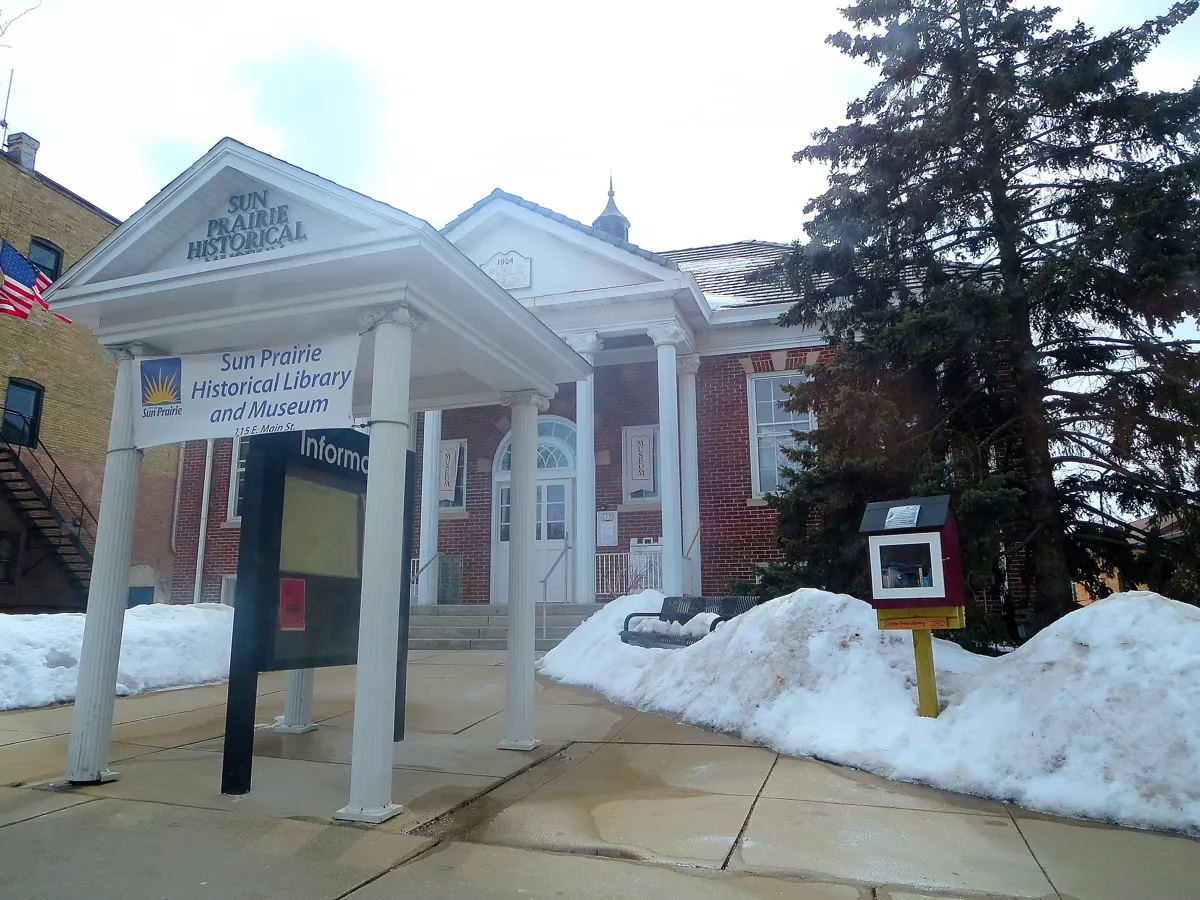
Photo: Corey Coyle, CC BY 3.0. Resized and converted to WebP.

This page is for people who garage their vehicles in Sun Prairie, WI, or nearby communities like Madison, DeForest, Windsor, and Cottage Grove and want to compare auto insurance options through an independent Wisconsin insurance agency. WisconsinAutoInsurance.com (Drivers Insurance Agency, Inc.) is dedicated to helping Sun Prairie drivers compare policies from multiple Wisconsin insurers by phone, email, and online – no walk-in office required.
Ready to compare? Call (844) 317-1313 or request your Sun Prairie auto insurance quote online in a few minutes. Coverage is not bound until confirmed by an authorized agent or insurer. Whether you have a clean record or carry tickets, accidents, or a lapse in coverage, you can request quotes – though acceptance and pricing depend on individual underwriting.
Why Sun Prairie Drivers Work with WisconsinAutoInsurance.com
Sun Prairie households need coverage that satisfies Wisconsin law, meets lender requirements on financed vehicles, and accounts for local driving conditions – from high-speed commuting in Dane County to parking on busy downtown streets in winter. The agency works with multiple Wisconsin insurers to help clients compare liability, uninsured motorist, optional coverages, and SR-22 options in one place.
Local, Wisconsin-Focused Insurance Agency Guidance
All guidance from WisconsinAutoInsurance.com is grounded in Wisconsin auto insurance rules, including the state’s minimum liability and uninsured motorist requirements. The team understands Sun Prairie-specific issues because it works with drivers in and close to Sun Prairie, not just Madison: congestion near Main St Sun Prairie and Grand Avenue shopping areas, daily commutes toward Madison and DeForest, and winter conditions that affect how you park and drive. The agency is not affiliated with Wisconsin DOT or the Office of the Commissioner of Insurance (OCI) – it simply helps customers interpret public information when purchasing coverage.
Clear Explanations of Your Coverage Choices
Rather than pushing a one-size-fits-all policy, the agency walks Sun Prairie drivers through each layer of protection: liability, required uninsured motorist, optional underinsured motorist, MedPay, comprehensive, collision, and add-ons. If you have a financed or leased vehicle, you’ll understand exactly what your lender requires versus what Wisconsin law mandates. Real-life scenarios – like adding a teen driver or moving to Sun Prairie from another state – are part of the conversation.
Convenient Phone and Online Service for Sun Prairie
Quotes and servicing happen by phone at (844) 317-1313 and through the website. Sun Prairie residents can compare options without driving into Madison or visiting multiple offices. Requesting a quote does not bind coverage; coverage starts only once an insurer or authorized agent confirms the policy effective date and time.
Wisconsin Auto Insurance Basics for Sun Prairie Drivers
This section gives a practical overview of the coverages most Sun Prairie households consider, based on Wisconsin law and common lender expectations. Official requirements can be reviewed at the OCI consumer guide (PI-233). The summary below puts key points in plain language.
Wisconsin Liability Insurance Requirements
Liability coverage pays for injuries or property damage you legally cause to others in a crash – it does not pay for your own vehicle. Wisconsin requires minimum liability coverage of:
-
$25,000 bodily injury per person
-
$50,000 bodily injury per accident
-
$10,000 property damage per accident
These are minimums under Wisconsin law, not recommendations. Many Sun Prairie drivers consider higher liability limits to better protect personal assets and future earnings. Higher liability limits can protect personal assets after severe accidents – imagine causing a chain-reaction crash on US-151 during rush hour versus bumping a parked car near Grand Avenue. The financial exposure is dramatically different.
Uninsured Motorist (UM) Coverage in Wisconsin
Wisconsin requires uninsured motorist bodily injury coverage with at least $25,000 per person and $50,000 per accident. Uninsured motorist coverage protects against uninsured drivers – it covers you, your family, and passengers if injured by a driver carrying no liability insurance or in certain qualifying hit-and-run situations.
UM does not cover vehicle property damage under Wisconsin’s standard requirements. Hit-and-run claims under UM have policy and legal conditions, such as reporting to police and establishing that another vehicle was involved. UM addresses injury caused by uninsured motorists; deer strikes and weather damage to your vehicle are separate comprehensive-coverage questions. Wisconsin drivers should verify that their quotes meet state-mandated minimum limits, including this required UM coverage.
Optional Underinsured Motorist (UIM) Coverage
Underinsured motorist bodily injury coverage is optional in Wisconsin, but insurers must tell you it is available. If a driver buys UIM, state rules require at least $50,000 per person and $100,000 per accident.
UIM in Wisconsin typically works by offset: it pays up to the difference between your UIM limit and the at-fault driver’s liability limit – not on top of both full amounts. Sun Prairie families who drive often on US-151, carry passengers, or have teens carpooling should consider whether UIM fits their risk comfort.
Medical Payments (MedPay) Coverage
Medical payments coverage is an optional no-fault benefit that can help pay medical expenses for you and your passengers after a crash, regardless of who caused it. Wisconsin insurers must offer MedPay, and if purchased, the minimum available limit is $1,000 per person, with higher limits commonly available. Some Sun Prairie households use MedPay to complement health insurance deductibles and copays – especially families with kids in sports or frequent carpooling.
Comprehensive and Collision Coverage
Comprehensive and collision are optional physical-damage coverages for your own vehicle, frequently required by lenders for financed or leased cars. Good coverage in Wisconsin typically includes comprehensive and collision policies when the vehicle’s value justifies the cost.
Collision covers damage to your vehicle when it hits another car or object – a guardrail on US-151, a light pole in a parking lot, or an overturn on icy roads. Collision coverage pays for damage to your vehicle after your chosen deductible. Lower premiums are often associated with higher deductibles, but that increases your out-of-pocket cost at claim time.
Comprehensive covers non-collision events: hail, windstorm, theft, vandalism, falling objects, fire, and hitting an animal like a deer along rural roads around Sun Prairie. Comprehensive coverage protects against non-collision incidents that are common in this area. Physical damage from a hit-and-run is generally not covered under comprehensive; it may fall under collision if your policy includes it and conditions are met.
Wisconsin law does not mandate comprehensive or collision, but lenders on financed vehicles typically do.
Other Optional Coverages Sun Prairie Drivers May Consider
Optional coverages commonly available in Wisconsin include towing and roadside assistance, rental reimbursement, and gap coverage. Needing a rental car after a crash on Main Street or roadside help during a Sun Prairie snow event are real possibilities. Availability, limits, and pricing depend on the insurer and policy form. Bundling auto insurance with home or renters insurance can yield discounts – ask about combining your auto coverage with home insurance, renters insurance, or motorcycle insurance when available through a carrier.
Sun Prairie Driving Conditions and How They Affect Your Policy
Where and how you drive in Sun Prairie shapes the coverage levels and options worth considering. The sections below connect specific local habits to practical insurance decisions.
Commuting on US-151 and Into Madison
Many Sun Prairie residents commute daily into Madison via US-151, with others heading toward DeForest, Windsor, or Cottage Grove for work. Higher-speed, higher-traffic exposure – especially during rush hours and bad weather – is a reason many commuters consider liability and UM/UIM limits well above the minimums. Car insurance costs in Wisconsin can vary significantly based on driver profiles, and regular highway commuters often face different rate factors than people who drive only locally.
Parking at large employer lots, park-and-ride facilities, or Madison shopping centers brings collision and comprehensive into play for hit-and-run or theft scenarios, if those coverages are included.
Downtown Main Street and Grand Avenue Errands
Grocery runs, school drop-offs, Grand Avenue shopping trips, and restaurant parking along Main St Sun Prairie create lower-speed but frequent exposure. Fender-benders, backing incidents, and door dings still involve liability and potentially collision coverage. Drivers who regularly park on busy streets in this area may want to think carefully about deductibles and physical-damage coverage levels.
Winter Weather, Snow Routes, and Parking Rules
Snow, ice, and limited visibility increase crash risk across the community. Sun Prairie enforces specific winter parking rules that every driver should know. According to the City of Sun Prairie’s official winter parking page:
-
Snow Routes prohibit parking from midnight to 7:00 a.m., December 1 through March 31, regardless of whether snow is on the ground. These routes are posted.
-
Snow Emergency: When declared, parking is prohibited on all city streets until the emergency is canceled or expires.
The city page includes a Snow Route map, a full list of designated routes, alternate-side parking rules on some streets (such as Wyoming Avenue from November 15 through March 31), and information on Snow Emergency alerts. Obeying these rules helps plows do their job and reduces the chance of towing or damage to parked vehicles during snow removal.
Insurance may help after a covered loss to your vehicle, but it does not cover tickets or city enforcement of parking rules. Those are separate obligations.
Families with Teen Drivers in Sun Prairie
Adding a high-school driver to the household changes your risk profile. Insurers typically charge more for households with teen drivers, and families often reconsider their liability and UM/UIM limits. Parents should review MedPay for immediate medical cost protection when teens carry passengers. Honest reporting of the teen driver and accurate garaging details – including whether the teen commutes to Madison, DeForest, or campus – are important for keeping the policy valid.
New Residents and True Garaging in Sun Prairie
“Garaging” refers to the place where your vehicle is primarily kept overnight. Insurers base rating and eligibility partly on this location. If you’ve recently moved to Sun Prairie from another state, you’ll need to update your policy and registration to Wisconsin and accurately list Sun Prairie as the garaging city. Wisconsin’s liability and UM requirements may differ from your prior state. Keeping garaging information accurate is important – incorrect garaging can cause claim issues or policy changes later.
Comparing Sun Prairie Auto Insurance Coverages: Three Real-World Scenarios
The following hypothetical Sun Prairie scenarios illustrate how liability, UM, UIM, MedPay, comprehensive, collision, and lender rules fit together. These are educational examples, not promises of coverage outcomes or rates. Actual claims depend on policy terms and circumstances.
Scenario 1: Sun Prairie Commuter on US-151 with a Financed SUV
A driver lives in Sun Prairie, commutes daily into Madison via US-151, and drives a financed late-model SUV. The lender requires comprehensive and collision with a maximum deductible. This driver considers higher-than-minimum liability limits because multi-vehicle highway crashes can produce medical and property costs far exceeding $25,000/$50,000/$10,000. UM and optional UIM limits are reviewed to protect against uninsured or underinsured drivers during long commutes. MedPay is considered to fill health-plan gaps after an injury, regardless of fault. Drivers need to consider their deductible amounts when evaluating auto insurance quotes – a $500 deductible versus a $1,000 deductible trades premium savings against out-of-pocket risk. The agency helps this commuter compare options among insurers, focusing on coverage combinations rather than price promises.
Scenario 2: Sun Prairie Family with a New Teen Driver
Two parents and a newly licensed teen share two vehicles garaged at their Sun Prairie home. The family reviews existing liability limits in light of the teen’s higher risk of at-fault accidents. They evaluate MedPay and UM/UIM to protect teen passengers and other family members during carpools and school activities. For an older, paid-off sedan, they weigh whether to keep comprehensive and collision based on the car’s value versus the chosen deductible. Comparing quotes requires the same liability limits and deductibles to ensure valid comparisons across insurers. The agency walks the parents through “what if” questions without guaranteeing a particular coverage level will be sufficient in every case.
Scenario 3: New Sun Prairie Resident Needing SR-22 and Possibly Non-Owner Insurance
A driver recently moved to Sun Prairie and learns that the Wisconsin DMV requires proof of insurance via an SR-22 filing before their license can be reinstated. According to the Wisconsin DOT:
-
An SR-22 is a certificate an insurer files with the Wisconsin DMV proving the driver carries at least required liability insurance.
-
Most insurers file the SR-22 electronically; the DMV records it within a short processing timeframe.
-
Some drivers must keep an SR-22 on file for three years from the date they become eligible for reinstatement, but requirements are case-specific.
Not every ticket or lapse in coverage requires an SR-22 – certain suspensions, revocations, occupational-license applications and other situations can require the filing. SR-22 is a filing, not a separate kind of policy; it can be attached to an owner’s policy or, when eligible, a non-owner policy. Non-owner policies are available only when a person does not own a vehicle and does not have regular access to a household car. Non-owner coverage generally focuses on liability and may include required UM or other available protections, but does not include comprehensive or collision for a borrowed vehicle.
Benefits of the Right Auto Insurance Mix in Sun Prairie
Choosing the right combination of coverages and limits – not just meeting the minimums – can protect both finances and daily life for Sun Prairie households.
Financial Protection Beyond the Minimums
Higher liability limits can better protect savings, home equity, and future earnings after a serious at-fault crash on US-151 or at a busy intersection. UM and optional UIM can help when another driver’s coverage is missing or insufficient under Wisconsin’s offset rules. No coverage choice eliminates all financial risk, but thoughtful limits reduce the chance that a single accident becomes a long-term financial strain.
Keeping Your Vehicle on the Road
Comprehensive and collision support getting back on the road after covered losses – hail, deer strikes, or collisions – especially when a car is needed for commuting from Sun Prairie to Madison. Rental reimbursement coverage, if selected and available, addresses real-world needs like getting to work or school during repairs. Claims are typically paid based on actual cash value, and older vehicles may not justify full physical-damage coverage.
Reducing Stress After an Accident
When drivers already understand their coverage, they can focus on safety and documentation after a crash rather than scrambling to interpret their policy. WisconsinAutoInsurance.com draws on its experience helping drivers compare coverage before they ever need to use it, so Sun Prairie drivers know what to expect if they ever have a claim.
Checklist: Preparing for a Sun Prairie Auto Insurance Quote
Bringing the right information to your first call or online form helps you compare options more efficiently. Comparing quotes helps find the best auto insurance rates when you have consistent information across carriers.
Information to Have Ready
-
Driver details for each household driver: Legal name, date of birth, driver’s license number, years licensed, and whether each driver commutes to Madison, DeForest, Windsor, or Cottage Grove.
-
Vehicle details for each car garaged in Sun Prairie: Year, make, model, approximate mileage, and VIN if handy. Note whether the car is owned outright, financed, or leased (include lender if applicable).
-
Current coverage information (if any): Existing liability limits, deductibles, and optional coverages such as UM, UIM, MedPay, comprehensive, and collision. Note any SR-22 filing currently in place or required by Wisconsin DMV.
Questions to Consider Before You Call or Click
-
How much could you realistically afford to pay out of pocket for an unexpected repair if you chose a higher deductible?
-
Would higher liability and UM/UIM limits better reflect your savings, home equity, or income level?
-
Is there a teen driver in the household now or in the near future, and how does that change your comfort level with coverage?
-
Do you park regularly along Sun Prairie streets, on Snow Routes, or in crowded lots where minor damage is more likely?
Understanding SR-22 and Proof of Insurance for Sun Prairie Drivers
This section is for Sun Prairie residents who received a notice from the Wisconsin DMV about proof of insurance or SR-22 filings. Requirements come from the DMV, and drivers can review current rules at the Wisconsin DOT proof-of-insurance page.
When Wisconsin DMV May Require an SR-22
SR-22 requirements generally follow certain suspensions or revocations – for example, serious violations or driving without required insurance – and are not automatically triggered by every ticket or short lapse. Only the DMV or a court order can tell a driver exactly whether SR-22 is required and for how long. Many individuals with an SR-22 obligation must maintain it continuously for about three years from the date they are eligible to reinstate, but specifics vary and should be confirmed directly through the DMV.
How an SR-22 Filing Works with Your Policy
An insurer typically files an SR-22 electronically with the Wisconsin DMV, and the DMV records it when processed. Drivers must keep their policy active; canceling or letting it lapse can cause another suspension if the SR-22 requirement is still in effect. An SR-22 can be attached to an owner’s policy (for drivers who own a vehicle) or a non-owner policy (for eligible drivers without a vehicle or regular household car access), when available from an insurer.
Sun Prairie drivers who need SR-22 filings can review the agency’s detailed pages on SR-22 insurance and non-owner SR-22.
Other WisconsinAutoInsurance.com Resources for Sun Prairie Residents
Sun Prairie drivers often find it helpful to compare with neighboring city pages and topic guides on the website.
City and Topic Guides: Wisconsin Auto Insurance
-
Madison Auto Insurance: Covers Madison-specific driving and coverage considerations – useful for Sun Prairie commuters working or studying in Madison.
-
Janesville Auto Insurance: Offers a comparison point for Dane County and Rock County drivers who travel between regions.
-
Wisconsin Cities Index: Sun Prairie residents with family elsewhere in Wisconsin can find guidance for other locations.
-
Minimum Car Insurance in Wisconsin: Details state-required minimums and why some drivers go beyond them.
-
Cheap Car Insurance in Wisconsin: Focuses on practical ways to look for more affordable coverage without assuming the lowest price is best for every Sun Prairie driver.
Frequently Asked Questions: Sun Prairie Auto Insurance
These FAQs address common questions Sun Prairie drivers ask before requesting a quote.
Do I have to carry auto insurance if I only drive occasionally in Sun Prairie?
Wisconsin law generally requires liability and UM coverage on vehicles driven on public streets, even if used infrequently. Dropping coverage while still using a vehicle can create legal and financial problems after a crash. Drivers should review exceptions with OCI resources and their agent.
What are the minimum auto insurance limits for a Sun Prairie driver?
Wisconsin requires minimum liability coverage of $25,000 per person, $50,000 per accident for bodily injury, and $10,000 for property damage per accident. Uninsured motorist bodily injury coverage of $25,000 per person and $50,000 per accident is also required. These are statewide requirements that apply in Sun Prairie as part of Wisconsin law, but many drivers choose higher limits to better protect their road and financial exposure.
Does Sun Prairie’s Snow Emergency or Snow Route status change my insurance coverage?
Your policy’s coverages and exclusions generally do not change when a Snow Emergency is declared, but city rules about where you may park definitely do. During a declared Snow Emergency, parking is prohibited on all city streets until canceled or expired. Snow Routes have midnight–7:00 a.m. parking bans from December 1 through March 31, regardless of snowfall. Full details, including a Snow Route map, are available at the City of Sun Prairie winter parking page. Tickets, towing, or city fees from violating parking rules are separate from an insurance claim for physical damage.
Can I get auto insurance in Sun Prairie if I have an accident or ticket on my record?
Many insurers consider drivers with accidents or tickets, but pricing and eligibility vary by company and driving history. WisconsinAutoInsurance.com cannot guarantee acceptance or specific rates; instead, the agency helps Sun Prairie drivers compare available options based on their record.
How fast can coverage start after I request a Sun Prairie auto insurance quote?
A quote request does not bind insurance coverage. An insurer or authorized agent must bind the policy and confirm an effective date and time. In many cases, if a driver qualifies and chooses to proceed, coverage can start the same day – but this depends on insurer approval and completion of required steps.
Do I need separate coverage if I drive for deliveries or ride-hailing out of Sun Prairie?
Personal auto policies often limit or exclude coverage while driving for a transportation network company or delivery service. Terms vary widely by insurer. Sun Prairie drivers who use their vehicles for paid deliveries or ride-hailing should discuss this openly with the agency so they can explore available endorsements or commercial options. Business insurance or a commercial policy may be necessary depending on the work involved.
How does non-owner insurance work if I live in Sun Prairie but don’t have a car?
Non-owner policies are designed for people who do not own a car and do not have regular access to a household vehicle but occasionally drive vehicles they do not own. Non-owner coverage generally focuses on liability and may include required UM or other available protections, but does not include comprehensive or collision for a borrowed vehicle. Some drivers pair non-owner coverage with SR-22 filings when required by Wisconsin DMV. Learn more at the non-owner SR-22 page.
Get Started with Sun Prairie Auto Insurance Today
Sun Prairie drivers can work with a Wisconsin-focused independent agency to compare liability, UM/UIM, MedPay, comprehensive, collision, SR-22, and non-owner options in one place. Coverage is tailored to Wisconsin rules, Sun Prairie commuting patterns, and each household’s comfort level with risk – without guaranteeing the cheapest or best policy.
Call WisconsinAutoInsurance.com at (844) 317-1313 to discuss your Sun Prairie situation with a licensed agent, or start a quote online any time. Submitting a request does not bind coverage.
The agency serves drivers garaging vehicles in Sun Prairie and throughout Wisconsin via phone and online service – proud to be helping individuals and families across the community find coverage that fits their needs, with the same local-minded approach people appreciate from professionals who stay involved as volunteers in the areas they serve.